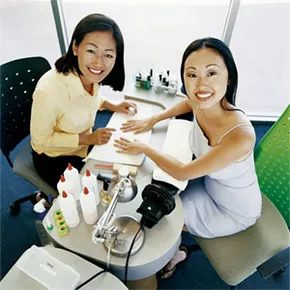
There is something strangely powerful about sitting in a salon chair. It’s not just about painting keratin. You invest in a version of yourself, even if your life seems to be falling apart.
Consider a woman who has just lost her job. She may be cutting all kinds of expenses, but she still gets the weekly manicure. Why? Because it’s the armor that makes you look professional. It’s a little shiny shield that protects you from rejection. It told the world, and more importantly, that he was still in control.
Then there is the physical act itself. The warm water. A massage that relieves tension in the forearms. The focused attention on every single digit. It is undeniably relaxing. You have to stop moving. To sit still. Breathe.
Sometimes it’s just social pressure. Your best friend is getting married. Bridesmaids must have matching nails. You don’t want to be the odd person out. You go. You let them paint your fingers with a color called “Canyon Coral” or “Moon Over Mumbai.”
The Hidden Benefits of a Manicure
People ask why they bother. The answer is simple. Because it forces you to make time for yourself.
You can’t rush a manicure. You have to sit there for an hour. You can choose what you do during that time. You can also gossip about the drama at work while the woman is sitting next to you. You can talk to a technician. You are literally holding hands with the person working on you. If you know them well, you might catch up on life. You may notice how much time has passed since you last spoke.
Even if you and your manicurist aren’t the best of friends, you can still benefit from a manicure in ways beyond the obvious.
For people who bite their nails, the effects are immediate. You won’t bite your fingers if you stare at your perfect nails. The polish acts as a barrier. A visual reminder to stop.
How long does a manicure last?
Not everyone understands this. Why sit in a salon and spend an hour getting your nails done? They don’t last forever. That is the business model. They want you back. To spend more money.
However, if you take care of it right, it will last longer than you think.
In a steady hand, it will probably break down within three days. Wash often. Working with them. Do not wear gloves when washing dishes. The water gets under the polish. The polish lifts. It flakes off.
However, for the average person, a manicure lasts a solid week.
It can be extended up to 2 weeks. Apply a clear top coat every other day. Seal the edges. It adds shine. Protects the base color. Here’s a little trick. A little extra step. But there is a difference.
Why do people get manicures?
You probably won’t bring your little finger to the salon. You might think this is a waste of time. A vanity project.
But you might still be curious. About the men and women around you who disappear behind glass doors every week. Who come out looking refreshed. Who seem to carry themselves differently.
There are secrets behind well-groomed hands. secret

The place is now decided. Check the health department’s online register that your license is up-to-date and that your penalty record are clean. OK, now you’re sitting in your chair staring at the most important decision of the day. “How do you want these nails to be?”
If you just want a shine, stick to natural products. But if your nails are short, damaged or chronically chewed, the salon world offers a variety of artificial options. The question is not just “false” or “true”. This is the spectrum.
Artificial art
You can glue the plastic tip to the free end of the natural nail. Or you can get a full coverage. Artificial nails that cover the entire nail plate are usually glued and cut to a suitable size. If you need more durability, ask for sculptured nails. The technician creates a new nail on your nail with acrylic, which dries in the air and hardens into a durable shell.
There is also a silk nail technique. This means gluing strips of clear fabric to the nails for reinforcement. It is lighter than acrylic, but still structured.
Once the foundation is laid, the final touches are important. Most salons use gel varnish. This is cured with UV or LED light to form a hard, shiny protective layer. Other products use traditional acrylic systems where powder and liquid monomers are mixed to form a thicker and more durable layer.
Why pay extra? A basic natural manicure costs $20-$30. Artificial sets can cost anywhere from $50 to over $100. However, there is a price to pay for a larger canvas. Want to enjoy the beach view with your thumb? Extra length and space is needed. Also, if you want to get rid of nail biting, the durable acrylic coating acts as a physical deterrent. Your teeth won’t get through.
Choosing Your Natural Canvas
Assuming you choose the natural path, the process is slow. The main focus is on the preparation, not the product.
First, choose a polish. Salons often have tens or even hundreds of colors in stock. Don’t think you are using something cheap and inferior. Luxury salons invest in long-lasting brands. If in doubt, spend 10 minutes here. A good nail polish has a huge impact on the longevity of your nail polish.
Next is the shape. You and the technician decide whether it is long or short, square or round. Rounded edges are popular because they give a soft look and are practical. Clipping the corners of the nails as they grow can lead to hangnails or ingrown nails. Technicians use a emery board to shape and smooth rough edges.
Then you get wet. In a bowl of warm soapy water. Just put your hands on it. It’s not just about relaxing. Softens cuticles, cleans the nail plate and removes bacteria and fungi. This step is important. If your cuticles are dry and hard, cutting them can cause pain and infection. Soaking makes the skin flexible and safe to handle.
After soaking, a powerful fan dries your hands. Now you are ready to start the real work.
Buffing, Massaging and Polishing, at Last
Gently push the cuticles back. There are also salons that offer trimming. Others don’t. This is where you ask questions. If you have sensitive skin, let them know. Next, your manicurist will lightly buff the surface of your nails to remove any ridges and create a smooth base for your manicure.
A massage follows. Apply cuticle oil to the skin and cuticles. This is not just for show. Moisturized cuticles heal faster and look healthier. It also increases blood circulation and helps your nails grow stronger over time.
Now it’s time to polish. Two layers are standard. The first layer traps moisture. the second provides the color

Cuticle Controversy
First, let’s get rid of the unpleasant parts. Whether you’re new to the salon or a seasoned veteran, dealing with cuticles can often be intimidating. Nail technicians will push your cuticles away and use scissors to trim those pesky hangnails unless you specifically tell them not to.
It feels very aggressive. But there’s a reason for that. Some experts believe that cuticles can overgrow and cover the nail plate. More realistically, they don’t want to sand the skin strips. Paint on skin chips almost immediately and spoils its appearance. It is better to remove the barrier.
Smoothing and Soothing
After the cut, it’s time to buffing. This step smoothes out the ridges of the nail plate and creates an uniform canvas. It also improves the adhesion of the buffing, which is the key to longevity.
Then the tension subsides. The massage begins. Each salon has its own rituals. You can soak in the steam of a hot towel. Next, the technician applies cream to your hands and rubs it up to your elbows. This is the part where most people stay.
The Prep Before the Color
The last two preparation steps ensure that the color remains intact. First, use an alcohol wipe to remove any remaining cream or old paint residue. If your nails are naturally oily, use a oil remover. This way, the nail buffing attaches directly to the keratin of the nails instead of the sebum layer.
Next is the base coat. It’s clear, but essential. Prevents colored nail buffing from staining your natural nails yellow or dark. Allow the nails to dry after each application. Some salons also use electric fans. Some people use UV lights. The latter is debatable. Many professionals prefer fans because cumulative exposure to UV rays poses potential health risks, including cancer.
Choosing Your Shade
Here is where your input matters. The technician paints one finger and asks, “Do you like this color?”
Don’t be polite. Answer honestly. It’s much easier to adjust the shade than after applying two coats to all 10 fingers. If you hesitate, you’re stuck with it.
In addition to the basic colors
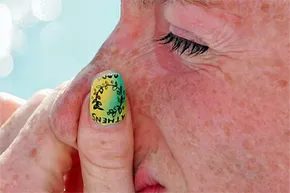
Color is not the only option. From your fingertips, rhinestones, charms, glitter, artificial pearls, appliqués and even dried flowers can become a canvas for. Some places can airbrush your initials or hand paint intricate designs. It’s not just about painting. It’s all about decorating.
A clear top coat seals everything. The last layer slows down chipping and adds shine. This is the danger zone. Don’t touch anything. Not your phone. Not your clothes. One accidental scrape can ruin hours of work.
The technician will guide you to the drying station. Applying a fan or UV light will help the degree of buffing. After 5-10 minutes, add a few drops of quick-drying solution. Your nails are dry. You can move again.
The Cost of Care
Do not touch the door handle. It’s time to pay. You can also pay before buffinging, but waiting is common. Prices vary widely. Prices for a basic manicure start at $15, but that amount can go up depending on the reputation of the salon, your area (prices tend to be lower in competitive urban centers) and whether you add a pedicure.
Tips are not negotiable. We recommend starting with 15 percent. 50% is also common for exceptional service. Many salons require cash tips.
Men Get Manicures, Too
Fact: Men get their nails done. The process is the same as for women: shaping, cuticle cleaning and buffinging. Many men omit colors altogether. Others opt for a clear matte polish or simply high gloss varnishes. The price is also the same.
One technician noted that men often get manicures simply because they care about appearance. When you experience the feeling of clean, well-groomed nails, they become loyal. In fact, some men visit more often than women. This is more than just a beauty ritual. This is hygiene. It’s here to stay.
Salon safety: What to know before booking
You go to the Salon for shiny nails, not for warts or fungal infections. If you play your cards right, the only thing that will grow on your finger is the fake flowers you chose. But a few simple tests can often make the difference between a pamper session and a medical hassle.
Start by looking for an official stamps of legality. In the United States, facilities must be approved by the state health department. Ensure metal instruments are properly sterilized and dispose of disposable instruments after each client use. The nail technician must also be approved by the state board. This is more than just a piece of paper, it means you have completed the required courses and completed 600 hours of supervised training.
These licenses are basic. They prove the salon can work cleanly. They don’t guarantee that they “did” it right the day you walked in.
The most common problems encountered in the salon are warts caused by the human papilloma virus and nail fungus. Both start with the previous customer. The virus spread because the salon did not properly sterilize its equipment. The virus or fungus sits on the tools. Second, the skin must be broken in order for it to become infected. This can happen if your cuticle breaks. Or it could have been created by a technician who sanded it too much or cut it too much.
How to protect the cuticle
By omitting it, the risk of pinching or cutting cuticles is greatly reduced.
“A common mistake people make is that their manicure damages their cuticles,” says Dr. Kent Aftergut, a dermatologist at the University of Texas Southwestern Medical Center in Dallas. “Some people don’t like the look of cuticles, but from a medical point of view they should be left alone. They separate cuticles from other areas (bacteria, fungi, viruses).”
The best defense is to bring your own clean equipment. Aftergut recommends this approach. The set can be purchased for around $60. This is a common sight in the salon. Most people don’t care at all. Some keep their tools in a bag. This way you don’t have to rely on the sterilization process.
If an infection occurs, seek medical attention immediately.
Avoid the dangers of pedicures
The combination of manicure and pedicure is attractive. However, be careful with “whirlpool” foot baths. It’s less common today, but it still exists. These tubs can cause serious infections with atypical mycobacteria. Microorganisms can enter the skin through shaving and cuts. Once infected, you may face boils, antibiotic treatments, and potential scarring on your legs.
Risk is built into the design. The tub sucks in municipal water, which contains the microbe. When the water is discharged, it passes through the screens and is circulated between the customers. Microorganisms grow on the screen. Most of the spas have been removed with the Ministry of Health’s cleanup, but some still remain.
“Ask the salon to guarantee that they don’t use foot baths with circulating water lines,” advises Aftergut.
Make your own manicure set at home
Staying at home in pajamas is a good option. All you need is the right equipment and time. Use an emery board and nail clippers for shaping. Remove old polish with cotton balls and remover. Add buffer if you want smooth nails.
Cuticle supplies are optional. Follow your dermatologist’s advice and leave them alone. If you insist on cutting, you need a cuticle softener. Save money by swapping hand lotion for a professional softener. You will also need a stick to push cuticles and sharp scissors. Finally, just like in the salon, you need a primer, color and top coat.
Home hygiene is non-negotiable. Clean your clippers and scissors. Remember to throw away disposable items after use. Never share tools with your partner, friends or roommates.
Costs vary. Regular brands sell for less than $30. Professional kits start at around $150.
With the right care, you can keep your nails beautiful and your skin intact. Protection is more important than perfection. You walk out with color, not complications. That’s the goal.