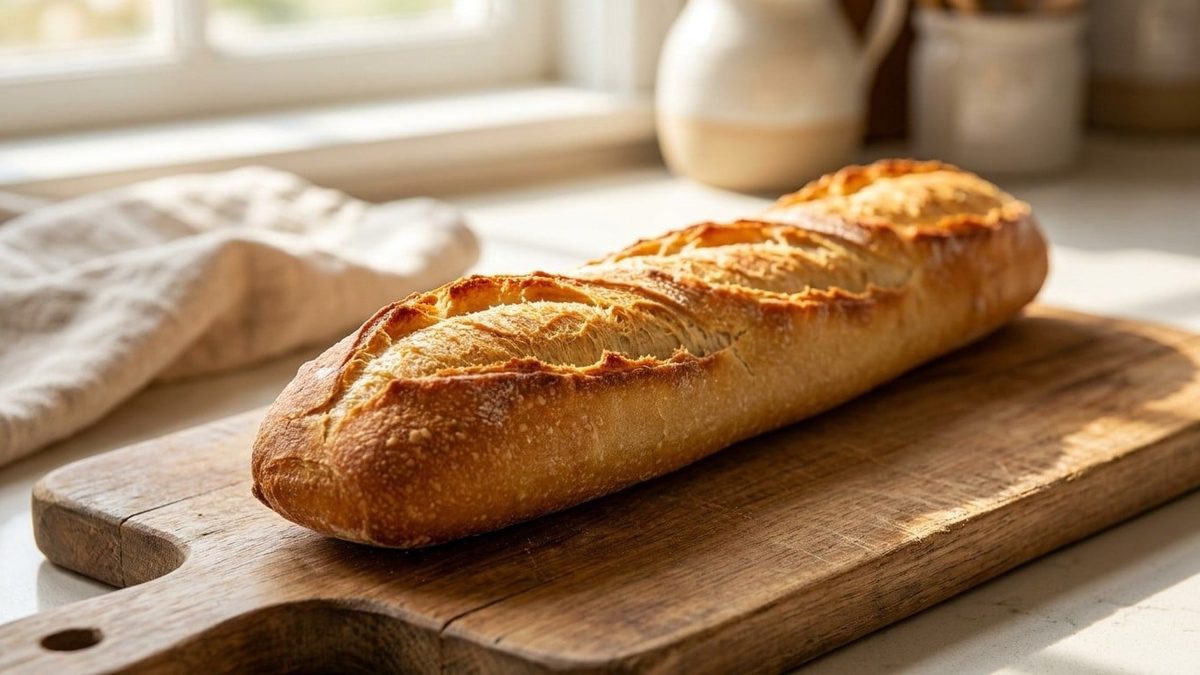
Millions of people shove half-eaten loaves into the fridge every day. They think they are preserving it. They are wrong.
The logic seems sound: cold preserves food. Butter. Meat. Leftover soup. But bread? Bread is an outlier. Putting a baguette in the refrigerator is the single worst thing you can do to it. Chemistry doesn’t lie here. The cold doesn’t save the bread. It kills it.
The fridge is the enemy of your crust. And the science behind why is simpler than you think.
Staling isn’t drying out
We have it all wrong. We assume bread goes stale because it loses moisture. We think the air sucks the life out of the crumb until it’s a brick.
That’s not what happens.
Staling is a molecular transformation. It’s called starch retrogradation. Inside the bread, starch molecules are initially soft and disordered. As time passes, they reorganize. They crystallize. They lock water inside their rigid structure and expel it from the matrix.
The crumb gets hard. The crust gets soggy as it absorbs that expelled water.
Even if you wrap the bread tightly in plastic wrap so not a single gram of water escapes, it will still go stale. It’s not dehydration. It’s a structural collapse. This distinction matters because it changes how you have to store it.
4°C is the danger zone
The speed of this retrogradation peaks at 4°C.
That is exactly the temperature of a standard domestic refrigerator.
It is not fastest at -18°C (freezer). It is not fastest at 20°C (room temperature). It is fastest at the fridge’s default setting.
Research published in Starch/Stärke, a journal dedicated to the chemistry of starch, confirms this. Retrogradation at refrigeration temperatures is about six times faster than at room temperature.
Think about that. A baguette bought in the morning and thrown in the fridge by evening will undergo the molecular aging of six days. In just one night. You aren’t protecting it. You are accelerating its death.
Temperatures between 0°C and 10°C create an environment where starch crystals form rapidly. The bread becomes crumbly and tough long before it dries out.
There’s also a secondary problem. Bread is porous. It acts like a sponge. In the fridge, it will absorb the odors of the leftover garlic, the onions, the fish. Now you have stale bread that tastes like last night’s dinner. The chemistry and the flavor profile are both working against you.
How bakers actually store bread
If the fridge is off the table, what is left?
Professional bakers don’t use plastic wrap for fresh loaves. They don’t use the fridge. They use materials that allow the bread to breathe while keeping pests and light out.
A linen bread bag is the gold standard for short-term storage. It keeps the air circulation balanced. It blocks light. Crucially, it doesn’t trap humidity so tightly that mold grows. Plastic traps moisture. Mold loves moisture. Linen lets the bread breathe.
Wooden bread boxes work similarly. Wood regulates humidity naturally. It absorbs excess moisture from the air and releases it when the air is dry. It creates a stable microclimate around the loaf.
The type of bread matters, too.
Sourdough resists staling better than white sandwich bread. The fermentation process produces acids and sugars. Bacterial amylases remain active during the gelatinization of the starch, which slows down the retrogradation process.
Fats and fibers also help. A brioche or a soft sandwich loaf stays tender longer because the fat interferes with the starch crystallization. A traditional baguette, with its simple ingredients, has no such protection. It stales fast.
You can reverse the damage
Staling is reversible.
If you have a loaf that has been sitting out for two days and it’s tough, don’t throw it away. The retrogradation process can be undone.
Heat disperses the starch crystals. It’s like stirring a snow globe. The crystals melt back into a disordered, soft state.
Take the stale bread. Mist it lightly with water if the surface is very dry. Put it in an oven preheated to a moderate temperature. The heat re-gelatinizes the starch. The crust crisps up. The crumb softens.
It won’t be exactly like fresh-baked bread. The window for perfection is short. But it restores the texture. It makes the bread edible again.
The fridge might be convenient. It might feel like responsible food management. But for bread, it’s a trap. Keep it at room temperature. Keep it in linen or wood. Or freeze it if you need it to last longer. Just keep it away from that 4°C death zone.
Your baguette deserves better than that.
Why the fridge is the enemy (and the freezer is the hero)
You want your bread to last a long time. You don’t want it to be a hard, crumbly brick by Tuesday. Most people reach into the fridge. This is a mistake. Big.
A freezer is the only right solution.
Here’s the science without the jargon: Bread goes stale because there’s something called retrogradation. Starch molecules rearrange themselves. They crystallize. This happens faster when moisture is present. The refrigerator cools the bread, but does not stop the process. It just keeps it moving at a slow, painful pace.
Freezer? It stops everything.
When the water turns into ice, the starch can no longer interact with it. The molecular structure freezes in time. Texture, moisture, softness – everything awaits. But there is a catch.
Golden rule: Allow to cool completely first
Never put warm bread in the freezer. Seriously.
The remaining heat creates condensation. Ice crystals form through condensation. Ice crystals damage crumbs. The result is soggy, then icy, then mushy bread. Allow to cool to room temperature. Wrap it tightly. Then freeze.
Thawing for texture
How you bring it back is important.
For slices? Hit them with a toaster. It restores some of the crispiness of the crust.
As a whole loaf or in large pieces? Use the oven. Preheat to 180°C (about 350°F). A few minutes is enough. The heat revives the structure without drying it completely.
Diabetes benefit
Here’s a twist no one sees coming.
Frozen bread has a lower glycemic index than fresh bread.
Think about it. A baguette still warm from the oven will send your blood sugar soaring. Frozen slice, thawed and toasted? It spikes it less.
Why? The freezing process changes the structure of the molecule slightly. This makes carbohydrates more difficult to digest. Your body breaks them down more slowly. Smaller peaks. Smoother sugar levels.
This is not just theoretical. Nutritional medicine sees a real benefit in this. For diabetics or anyone watching their blood sugar, frozen bread may be a wiser choice. Paradoxically, “stale” bread is better for the metabolism than fresh bread.
It’s counterintuitive. But the data is correct.


