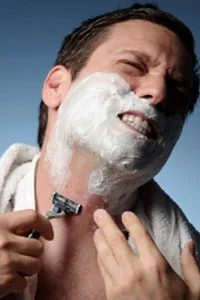
Ask an ancient Roman about personal hygiene and they would tell you that hair removal was a necessity. They didn’t have an electric shaver. They used a pumice stone to exfoliate facial hair. In the past, prehistoric people apparently used shells and shark teeth to scrape or pick their whiskers. Neither method was skin-friendly.
Fast forward to today. We have razors with five blades, lubrication strips and a vibrating handle. Has it really gotten better? Not necessarily. It totally depends on your technique.
A proper shave isn’t just about looking clean. It works as a physical exfoliator and removes dead skin cells. It can even stimulate collagen production. Used incorrectly? You’re asking for trouble.
Why shaving goes wrong (and how to fix it)
The goal of shaving is to improve your appearance. The wrong technique has the opposite effect and leads to unpleasant and unsightly skin conditions.
The most common culprit is razor burn. This happens when the blade causes too much friction on the skin. It’s that red, angry irritation you get when you run out the door without shaving cream. Usually, time, a cold compress, and alcohol-free moisture can ease the discomfort.
However, if you notice redness, itching and small whiteheads, you may have folliculitis, also known as barber’s rash. This is a bacterial infection caused by Staphylococcus aureus, which invades the hair follicles. It often goes away on its own when you stop the irritating activity. Persistent cases may require topical or oral antibiotics.
Don’t confuse folliculitis with razor bumps or ingrown hairs. Ingrown hairs occur when a shaved hair curls back and grows into the skin. Irony alert: Multi-blade razors can cause this. The first blade cuts the hair. The following blades lift the hair up and out before cutting it. When the hair pops back under the surface of the skin, it gets stuck. This results in a close shave, but increases the risk of ingrown hairs.
The right shave for healthy skin
Shaving can have a positive effect on your skin and may even make you look younger, especially if gray hairs are visible. Follow this routine to avoid the unpleasant sensations mentioned above.
First Prepare the skin. Wash your face with warm water or apply a hot, wet towel. This makes the beard softer. Alternatively, you can shave in the shower using a non-fog mirror.
Apply moisturizing shaving gel. Avoid traditional shaving foam as it can clog pores. Leave the gel on for about three minutes to soften the hair even more. If you have a tough beard or sensitive skin, apply a layer of shaving oil under the gel.
Choose a sharp, clean razor. If you use disposable razors, change them every three or four shaves. If irritation occurs regularly, switch to a single-blade safety razor. It does not cut hairs below the surface of the skin, which prevents ingrown hairs. In addition, less pressure is needed, which reduces razor burns. Rinse the blade often.
Shave with short strokes in the direction of hair growth. Going against the grain will result in ingrown hairs.
When done, rinse with cold water to close pores. Pat the skin dry. Do not rub.
Finally, apply an alcohol-free moisturizer. Now you’re ready to show the world smooth, irritation-free skin.
Quick timing tip
If your beard doesn’t grow back quickly, try shaving in the evening. In the morning, the skin on the face is swollen, which makes it difficult to get close to the hair roots. If you can’t shave at night, wait at least 20 minutes after waking up before you start.
Shaving is a daily ritual. Treat it with respect and your skin will thank you. Ignore it and you’ll deal with the consequences. The choice is yours.


