


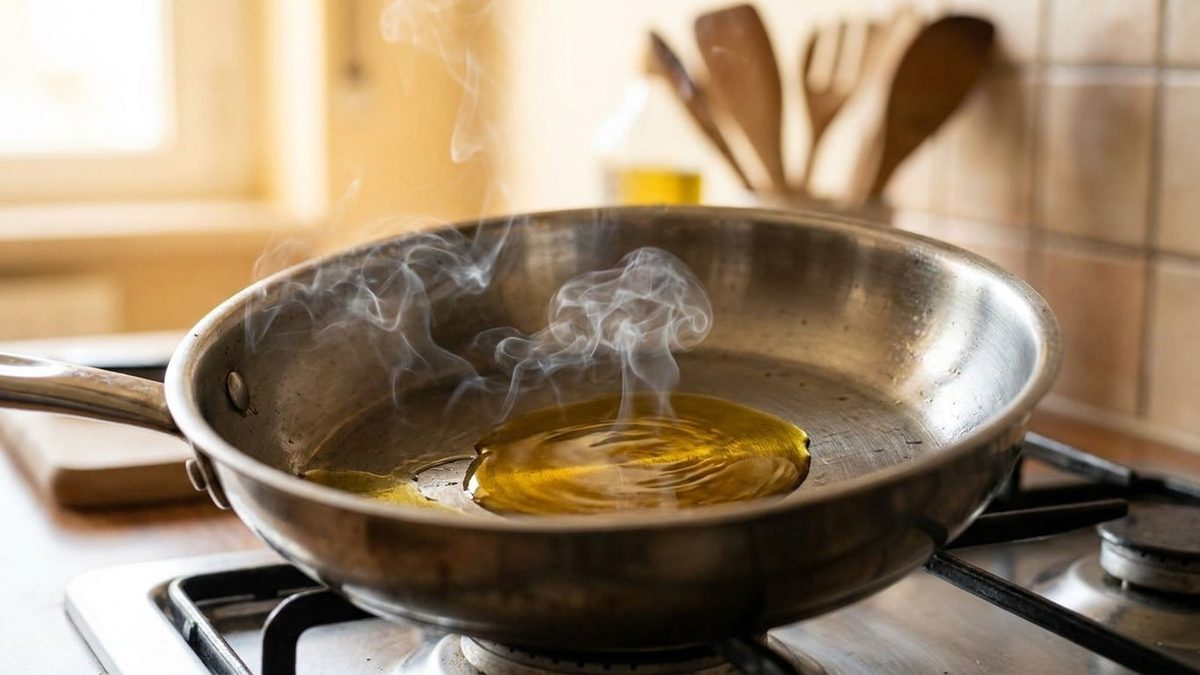
We’ve been conditioned to trust extra virgin olive oil as the golden standard of kitchen health. It’s in the salads, it’s in the marinades, and let’s be honest, it’s often the go-to for everything else. But there is a catch. A dangerous one.
When you heat extra virgin olive oil to frying temperatures, it stops being your ally and starts becoming a hazard. The margin for error is razor-thin. In fact, it often doesn’t exist.
Here is the reality that most cooks miss until the smoke alarm goes off.
The Chemistry of Smoke
The issue isn’t just about bad taste. It’s about molecular breakdown. Every oil has a specific threshold called the smoke point. This is the temperature at which the oil begins to burn continuously. Once you cross that line, the chemical structure of the oil starts to degrade.
When extra virgin olive oil smokes, it releases volatile compounds. The primary culprit is acrolein. This is the same substance that makes your eyes water and your throat itch when you’re cooking with overheated fat. Acrolein is irritating to the respiratory mucosa and eyes. At higher exposure levels, it becomes toxic.
The International Agency for Research on Cancer (IARC) classifies acrolein as “probably carcinogenic to humans” (Group 2A). This classification is based on sufficient evidence of carcinogenicity in laboratory animals and strong mechanistic data. When you fry in extra virgin olive oil beyond its limit, you aren’t just ruining the meal. You are inhaling and ingesting potential carcinogens.
Other compounds join the party. Heating oil past its smoke point breaks down fatty acids, leading to the formation of polycyclic aromatic hydrocarbons. These are also linked to cancer risk. The “healthiest” oil on your shelf becomes a source of toxins the moment it hits the wrong heat.
The Olive Oil Misconception
Extra virgin olive oil is indeed rich in polyphenols, monounsaturated fats, and antioxidants. It has a well-established link to longevity and heart health. But these benefits vanish when the oil is subjected to high heat.
The smoke point of extra virgin olive oil sits between 185°C and 191°C. Standard frying, however, typically requires temperatures between 175°C and 185°C.
Do the math. You are operating on the absolute edge of stability. A few minutes longer on the stove, a hotter burner, or simply not checking the temperature means you’ve breached the limit. The polyphenols burn off. The beneficial fats oxidize. The toxins take their place.
This is where confusion reigns supreme. Many people mistake extra virgin olive oil for refined olive oil. They look similar. They live in the same aisle. They behave completely differently under heat.
Refined olive oil undergoes a chemical or physical refining process. This removes impurities and free fatty acids, making the oil much more stable. The smoke point for refined olive oil ranges from 220°C to 240°C. That is a massive safety buffer.
The irony is palpable. The most expensive, nutrient-dense version of the oil is also the most fragile. The cheapest, least nutritious version is the most robust for cooking. It is a fundamental trade-off in culinary chemistry. High stability usually means lower nutritional value at room temperature. Using the same bottle for sautéing and dressing is like using the same knife to slice bread and carve a roast. It might work, but you’re damaging the tool.
Reading the Label for Safety
If you want to cook safely, you need to look beyond the brand name. You need to look at the processing method and the fatty acid profile.
Consider sunflower oil. Refined sunflower oil has a smoke point of 227°C to 232°C. Unrefined sunflower oil? It starts smoking between 107°C and 160°C. The difference isn’t the sunflower. It’s the refinement.
Now, look at rapeseed oil (canola). It is often touted as a heart-healthy alternative due to its favorable omega-6 to omega-3 ratio (around 2:1). But its smoke point is between 107°C and 120°C. A hot pan reaches 150°C to 180°C easily. Using raw rapeseed oil for pan-frying means you are burning the oil before the food is even halfway cooked. It creates irritants and destroys those precious omega-3s.
So, which oils should you actually use for high-heat cooking?
Two options stand out for their thermal stability:
- Refined Peanut Oil : With a smoke point of 230°C, this is a staple in professional kitchens for frying. It is highly resistant to heat and maintains its structure well.
- High-Oleic Sunflower Oil : This is less common in standard grocery stores but deserves a spot in your pantry. “High-oleic” sunflower oil is bred for stability. It has a high concentration of monounsaturated fats, similar to olive oil, but it can withstand temperatures up to 230°C without breaking down.
The keyword on the bottle matters. Look for “high-oleic” or “refined.” These are the signals that the oil has been engineered or processed to survive the heat of the kitchen without turning toxic.
Choosing the right fat isn’t just about flavor. It’s about safety. Your body didn’t sign up for a dose of acrolein with its dinner.
Stop burning your health: the heat rule you need
You are likely breathing in carcinogens every time you sear a steak at high heat.
It happens fast. Smoke rises. You think, “That’s just flavor.”
It’s not. That smoke is acrolein. It is aldehydes. These compounds irritate your airways. They build up in your lungs. And if you eat food cooked in overheated oil regularly, you are increasing your risk of digestive and respiratory cancers.
One bad meal won’t kill you. But daily habits? They add up.
The fix isn’t complicated. It doesn’t require expensive gadgets. It just requires changing which bottle you grab from the cupboard.
The three-bottle strategy
Stop using one oil for everything. You need three distinct roles in your kitchen.
- Delicate & Raw: Cold-pressed rapeseed oil (colza). This is your omega-3 powerhouse. It stays in the fridge or the dressing bowl. Never heat it.
- The Everyday Workhorse: Extra virgin olive oil. This is your omega-9 source. It shines in Mediterranean dishes. It handles gentle cooking under 180°C (356°F). It finishes dishes. It dresses salads. It does not go under a broiler.
- The High-Heat Specialist: Peanut oil or high-oleic sunflower oil. This is your fryer and sear oil. Its sole job is to resist breaking down when the pan gets hot.
Why smoke is the enemy
Here is the hard truth: the healthier an oil is, the less heat it can take.
Omega-3s are fragile. Heat destroys them. When they break down, they become toxic.
Omega-9s are more stable. They handle moderate heat well. But push them too far, and they degrade too.
So, when is it too hot?
When you see wisps of smoke rising from the pan.
That moment, a chemical reaction has already started. The oil is degrading. You are coating your food in free radicals and harmful byproducts.
Never consume oil that is smoking. It is already toxic.
If you want a crispy sear, use the peanut or high-oleic sunflower oil. If you want heart health and flavor, stick to olive oil at lower temperatures or in raw applications.
Practical swaps for your next meal
You don’t need to overhaul your life. Just swap the oil for the task.
- Making a vinaigrette? Use rapeseed or olive oil. No heat involved. Full nutrient retention.
- Sautéing vegetables? Olive oil is fine. Keep the flame medium.
- Frying chicken or searing fish? Pull out the peanut or high-oleic sunflower oil. It can handle the 200°C+ heat without turning into poison.
- Finishing a pasta dish? Drizzle extra virgin olive oil right before serving. The heat is gone. The polyphenols remain.
This isn’t about fear. It’s about precision.
Your body can handle occasional mistakes. But it shouldn’t have to process daily doses of burnt lipids.
Mix your oils. Match the heat to the molecule. And

