Silica. Tiny. Dangerous?
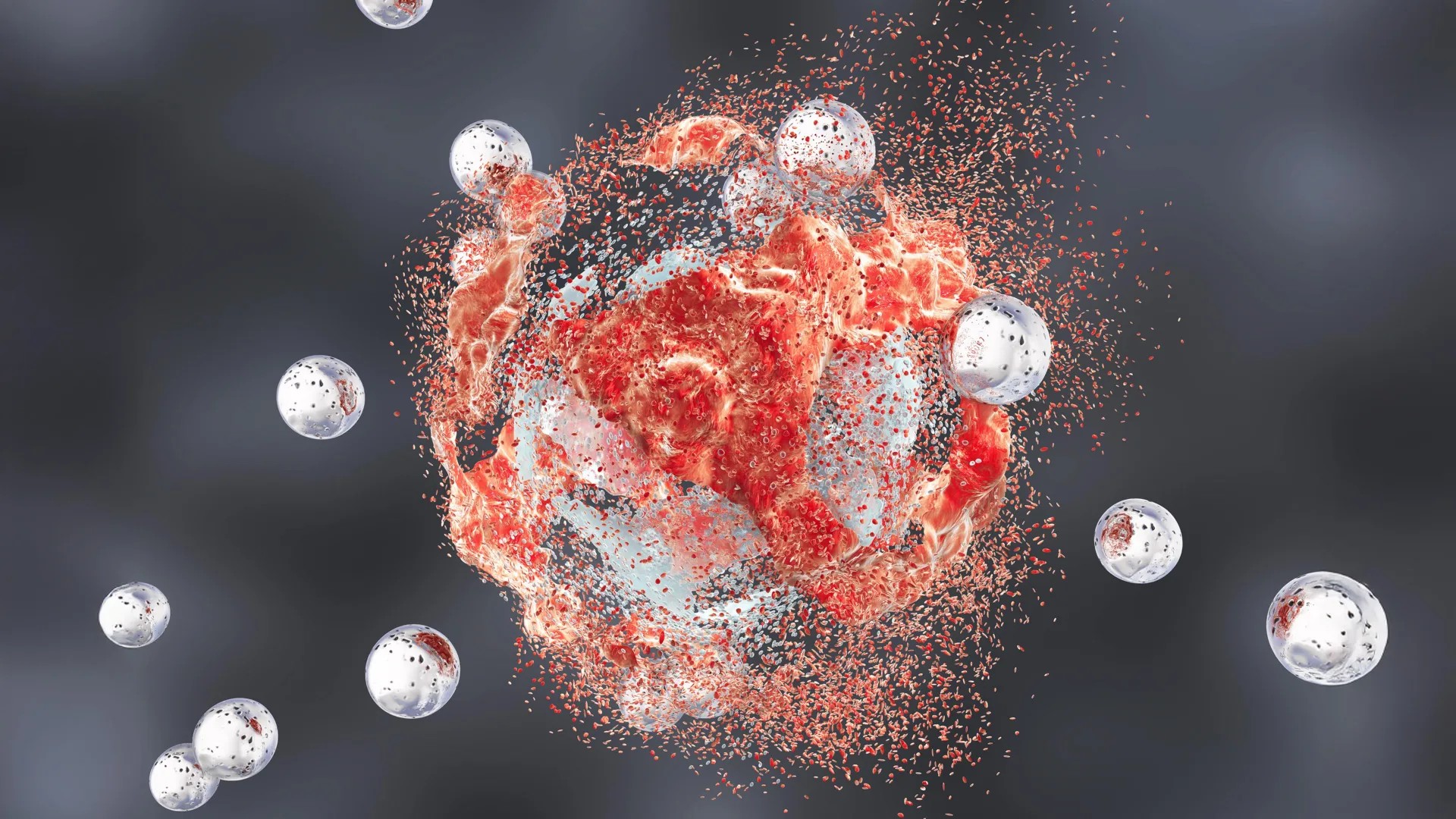
Actually, no. It’s in your breakfast cereal. Your spinach. It’s amorphous, found naturally in fossils of microscopic organisms. But engineers tweaked it. They made nanoparticles. Specifically, ultrasmall fluorescent core-shell silica ones. Cornell calls them Prime dots. Or just C’ dots.
Originally? They were built for imaging. To help surgeons see. They are in late-stage trials for that already.
But then the researchers noticed something else.
The dots killed cancer cells. Aggressively. And they left healthy cells alone. Mostly.
In mice with aggressive prostate cancer, these particles did two things at once. First, they forced tumor cells to destroy themselves via ferroptosis. Second, they woke up the immune system. A “cold” tumor, immune-resistant and lazy, became “hot.” Active. Vulnerable.
It changes the game.
“We’re very encouraged… this would represent a new clinical paradigm.”
— Dr. Michelle Bradbury, Weill Cornell
She’s right to be excited. The work came from her lab teaming up with Dr. Ulrich Wiesner’s group at Cornell. Materials science meeting oncology.
The mechanism is messy
Ferroptosis is weird. It’s not apoptosis. It’s oxidative stress. The cell membranes basically melt away. Fatty acids go bad.
The nanoparticles? They suck iron from the blood. Positive ions. They drag that iron into the tumor.
Why? Maybe. Scientists don’t know the exact trigger yet. But the result is clear. Oxidation spikes. Cell dies.
Is that it?
No.
Immunity wakes up
The immune cells near the tumor shifted gears. T-cells. Macrophages. They went from inactive bystanders to killers.
The researchers attached a target molecule to the dots. PSMA. Prostate cancer cells love this protein. So the dots stuck to the tumor. They avoided the rest of the body. Some went to the spleen. No toxicity found there though. Just silence.
Dr. Wiesner thinks it’s surreal. How can one particle cause so many effects, simultaneously, only in tumors?
Maybe because we eat silica every day. Leafy greens. Grains. It’s already in the biology. We’re just now noticing.
Combine or die
Single therapy? Okay results. C’ dots alone? Better. Immunotherapy alone? Modest improvement.
Combine them?
Four out of ten mice achieved complete or near-complete remission. Indefinite survival.
Add a third drug, a CSF-1R blocker? That hits macrophages. Five out of ten mice got the same result.
That is a big jump.
“We think there’s nothing else out there with such a strong and durable effect,” Bradbury said.
Dr. Jedd Wolchok agreed. He runs the Meyer Cancer Center. He noted that prostate cancer usually laughs at immunotherapy. Hard to get a durable response.
These particles fix the environment. They make the immune response work.
Human trials? Soon?
Probably.
The team—Siddiqui, Zhang, DeLeon, Naguib, Lee, plus Bradbury and Wiesner—spun this out. It took years. Synthesis, mechanism, translation. Lots of hard work.
The dots are a new class. They hit inflammation, immunity, metabolism. All at once.
Bradbury and Wiesner hold the patents. The funding came from DoD, NIH, and the Parker Institute.
What’s next? Humans.
Can we eat our way out of cancer? Can a glass particle wake up our own defenses?
The mice survived. We don’t know if we will. Yet.